Banking Software Security: Meeting UAE Central Bank Compliance Requirements
Banking Software Security: Meeting UAE Central Bank Compliance Requirements
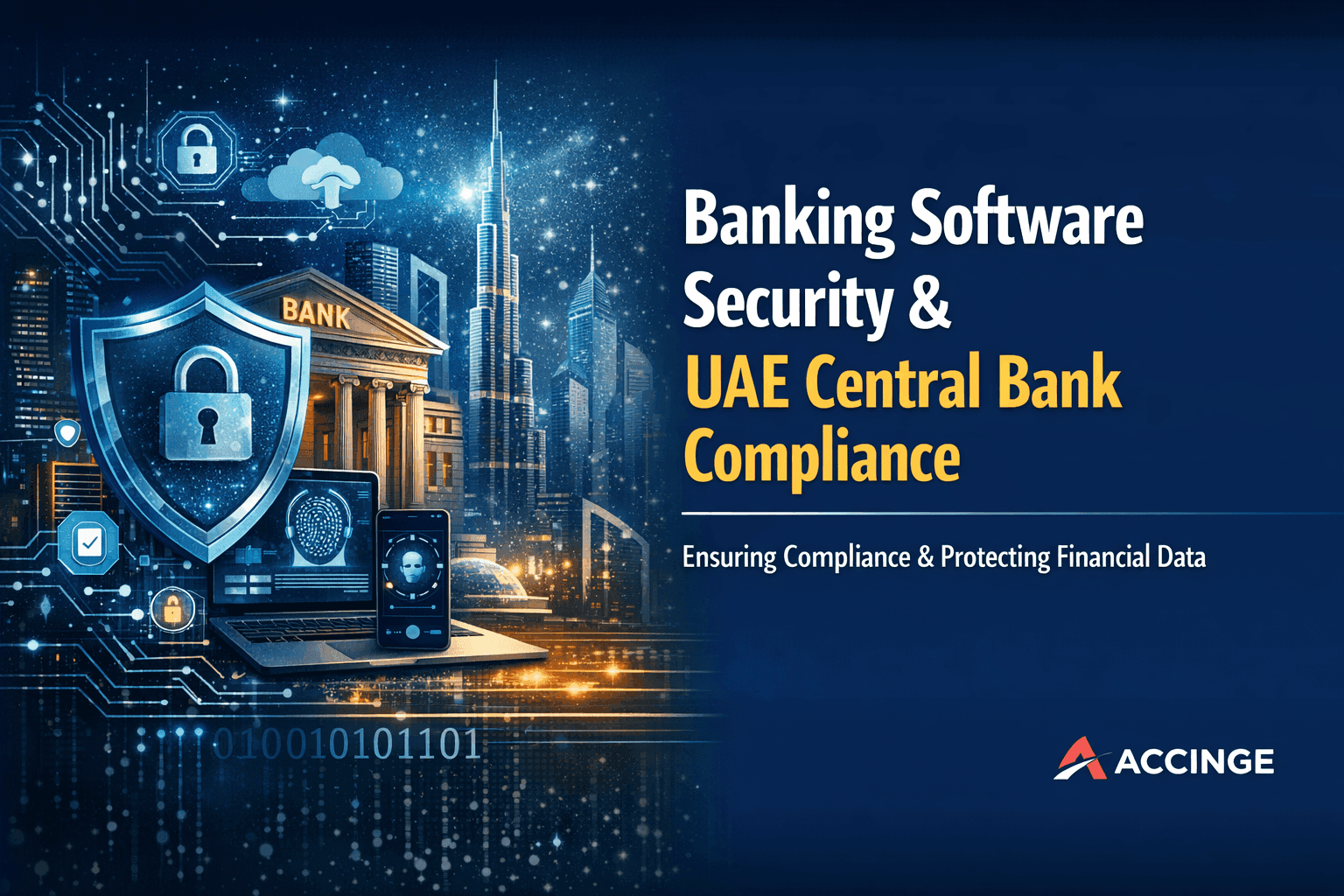
In the rapidly evolving financial ecosystem of the UAE, digital banking and fintech innovations are growing at an unprecedented pace. With this transformation comes a critical responsibility—ensuring strong software security while complying with UAE Central Bank regulations.
For financial institutions, security is no longer just a backend concern—it directly impacts customer trust, regulatory approval, and long-term business sustainability.
At Accinge Technologies, we help organizations design secure, compliant, and scalable banking systems tailored to modern regulatory demands.
🏦 Understanding UAE Central Bank Compliance
The UAE Central Bank (CBUAE) has established strict frameworks to ensure:
- Protection of customer financial data
- Strong cybersecurity practices
- Risk management and governance
- Secure digital transactions
- Fraud detection and prevention
With digital banking expanding rapidly, compliance is becoming more stringent, requiring continuous monitoring and system upgrades.
🔐 Core Security Requirements for Banking Software
To meet regulatory expectations, banking applications must include multiple layers of security.
1. End-to-End Data Encryption
- Encryption of sensitive data at rest and in transit
- Use of secure protocols (TLS/HTTPS)
- Protection against data breaches
2. Identity & Access Management (IAM)
- Multi-factor authentication (MFA)
- Role-based access control (RBAC)
- Secure login and session management
3. Real-Time Monitoring & Threat Detection
- Continuous system monitoring
- Intrusion detection systems
- Automated alerts for suspicious activities
As highlighted in modern digital transformation strategies, real-time insights are essential for proactive risk management.
4. Secure API & Third-Party Integration
Banking ecosystems rely heavily on APIs, making it essential to:
- Authenticate all integrations
- Encrypt data exchanges
- Monitor third-party risks
This aligns with broader trends in AI-powered and integrated enterprise systems discussed in modern software blogs. :contentReference[oaicite:0]{index=0}
5. Data Privacy & Governance
- Strict control over customer data usage
- Audit trails for all transactions
- Compliance with regional data protection laws
⚖️ Common Challenges Faced by Banks
Despite having regulations in place, many organizations struggle with:
- Legacy systems that lack modern security features
- Difficulty maintaining compliance documentation
- Managing multi-vendor integrations
- Keeping up with evolving cyber threats
These challenges highlight the need for modern, scalable, and compliance-ready platforms.
💡 How Accinge Technologies Helps
At Accinge Technologies, we specialize in building secure banking and fintech solutions aligned with UAE regulatory frameworks.
Our solutions include:
- Secure-by-design architecture
- Compliance-ready development practices
- Advanced authentication and encryption
- Real-time monitoring dashboards
- Seamless system integrations
🔗 Explore our services:
👉 Accinge Technologies
🔗 Explore More Insights from Accinge
To stay updated with trends in technology, security, and digital transformation, explore:
You can also read related insights such as:
- 👉 Modern Web Development for Business Growth
- 👉 AI-Powered ERP in UAE & Middle East
- 👉 Future of Software Development
These topics highlight how secure and scalable systems are shaping industries today.
🚀 Best Practices for Compliance
To maintain long-term compliance, organizations should:
- Conduct regular security audits
- Implement zero-trust architecture
- Train employees on cybersecurity awareness
- Keep systems updated with latest patches
- Partner with experienced technology providers
🧠 Final Thoughts
In the UAE’s regulated financial landscape, security and compliance go hand in hand.
Banking software must not only deliver seamless digital experiences but also meet strict regulatory standards. Organizations that invest in secure and compliant systems gain a competitive edge by building trust, reliability, and long-term customer relationships.
At Accinge Technologies, we empower businesses with solutions that are secure, compliant, and future-ready.
“In digital banking, security is not a feature—it’s the foundation.”