The Future of Software Development: Emerging Trends and Technologies

The Future of Software Development in 2026: Smarter, Faster, and Secure by Design
Software development is no longer just about writing code—it’s about orchestrating intelligence, automation, and resilience at scale. As we move deeper into 2026, the pace of innovation has accelerated dramatically, driven by artificial intelligence, cloud-native infrastructure, and a growing demand for secure, user-centric applications. Businesses that fail to adapt risk falling behind in an era where digital agility defines market leadership.
At Accinge Technologies, we’re at the forefront of this transformation—building next-generation software solutions that blend cutting-edge engineering with real-world business impact. From AI-powered development workflows to zero-trust security architectures, the future of software is already here.
Discover how intelligent systems streamline operations across your enterprise: Asset Tracing System: Revolutionizing Business Asset Management.
AI and Automation: Redefining How Code Is Written
Artificial Intelligence has moved from experimental labs into the daily workflow of developers worldwide. In 2026, AI isn’t just assisting—it’s co-creating.
🔸 AI-Assisted Coding
Tools like GitHub Copilot, Amazon CodeWhisperer, and custom LLMs trained on proprietary codebases now suggest entire functions, refactor legacy logic, and auto-document APIs. At Accinge, we integrate domain-specific AI models that understand your business logic—so when a developer types “calculate VAT for UAE exports,” the system generates compliant, tested code instantly.
🔸 Intelligent Testing & Debugging
Gone are the days of manual test case creation. AI-driven platforms now:
- Auto-generate unit, integration, and end-to-end tests based on code changes
- Predict failure-prone modules using historical bug data
- Simulate thousands of user scenarios in minutes via synthetic testing
This reduces QA cycles by up to 60% while improving coverage.
🔸 Self-Healing Code & Automated Refactoring
Modern IDEs flag performance bottlenecks, security anti-patterns, and technical debt in real time. Some systems even propose—and safely apply—refactoring suggestions, keeping codebases clean without developer intervention.
The result? Faster releases, fewer outages, and lower maintenance costs.
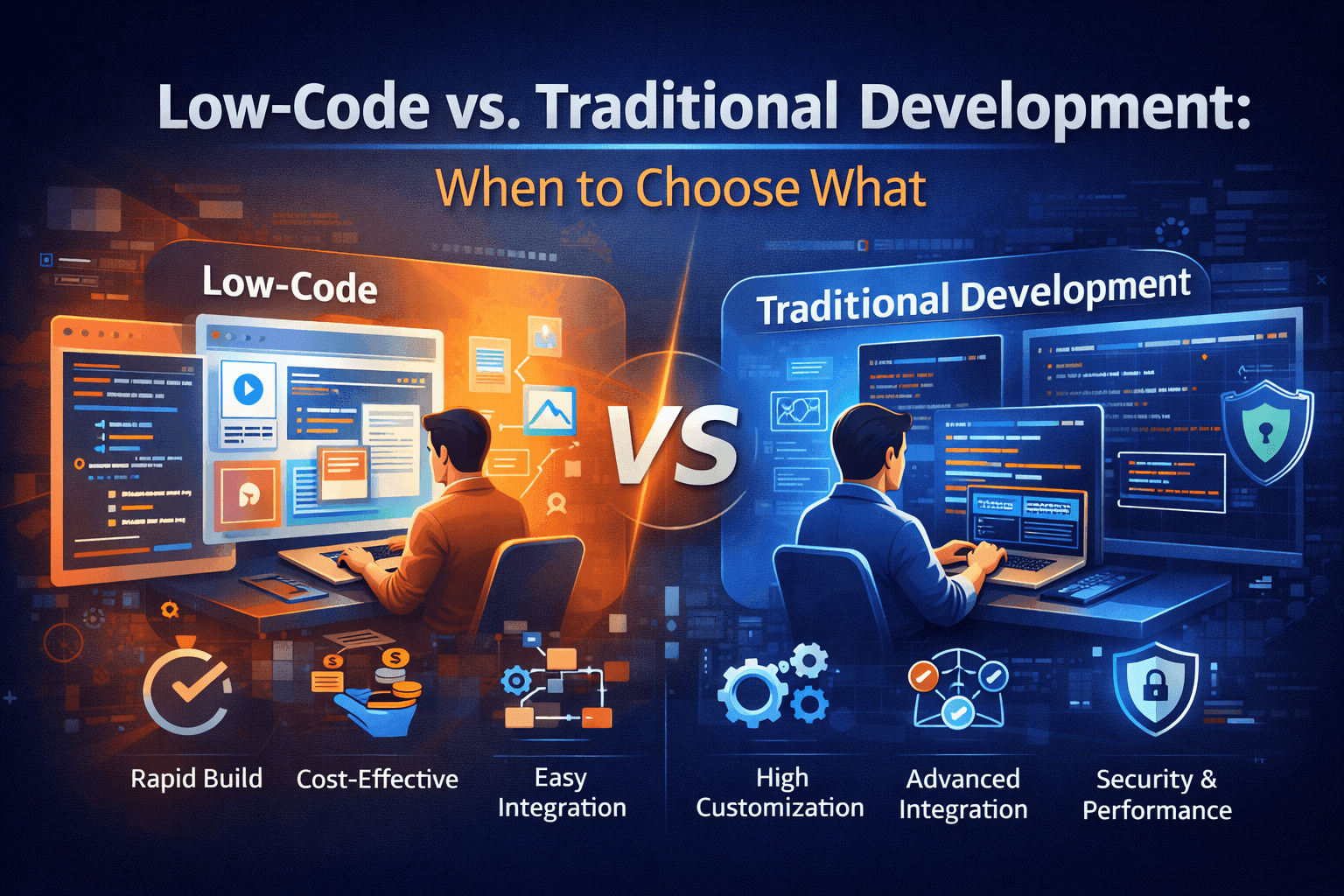
Low-Code and No-Code: Democratizing Software Creation
While complex systems still require expert developers, 80% of internal business tools can now be built without writing a single line of code. This shift empowers non-technical teams to solve their own problems—without waiting months for IT backlog clearance.
🔸 Rapid Prototyping & MVP Development
Marketing teams can build campaign landing pages. HR can design onboarding workflows. Operations can create inventory trackers—all using intuitive drag-and-drop interfaces. These prototypes often evolve into production-grade apps, slashing time-to-market from weeks to hours.
🔸 Citizen Developers Driving Innovation
With proper governance, “citizen developers” (business users trained in low-code platforms) become innovation catalysts. At Accinge, we implement enterprise-grade low-code environments (like custom Strapi or Retool instances) that enforce security, audit trails, and integration standards—so agility doesn’t compromise control.
🔸 Hybrid Development Models
The future isn’t “low-code vs. pro-code”—it’s both. Professional developers focus on core architecture, APIs, and AI logic, while business units handle front-end workflows. This synergy accelerates delivery while preserving scalability.
Cloud-Native & Serverless: Building for Scale and Resilience
Monolithic applications are giving way to modular, event-driven architectures that scale elastically and recover instantly from failures.
🔸 Microservices Done Right
Instead of one giant codebase, modern apps are composed of small, independent services—each owning a specific function (e.g., user auth, payment processing, notification engine). Benefits include:
- Independent deployment and scaling
- Technology flexibility (use Python for ML, Node.js for APIs, etc.)
- Easier team ownership and faster iteration
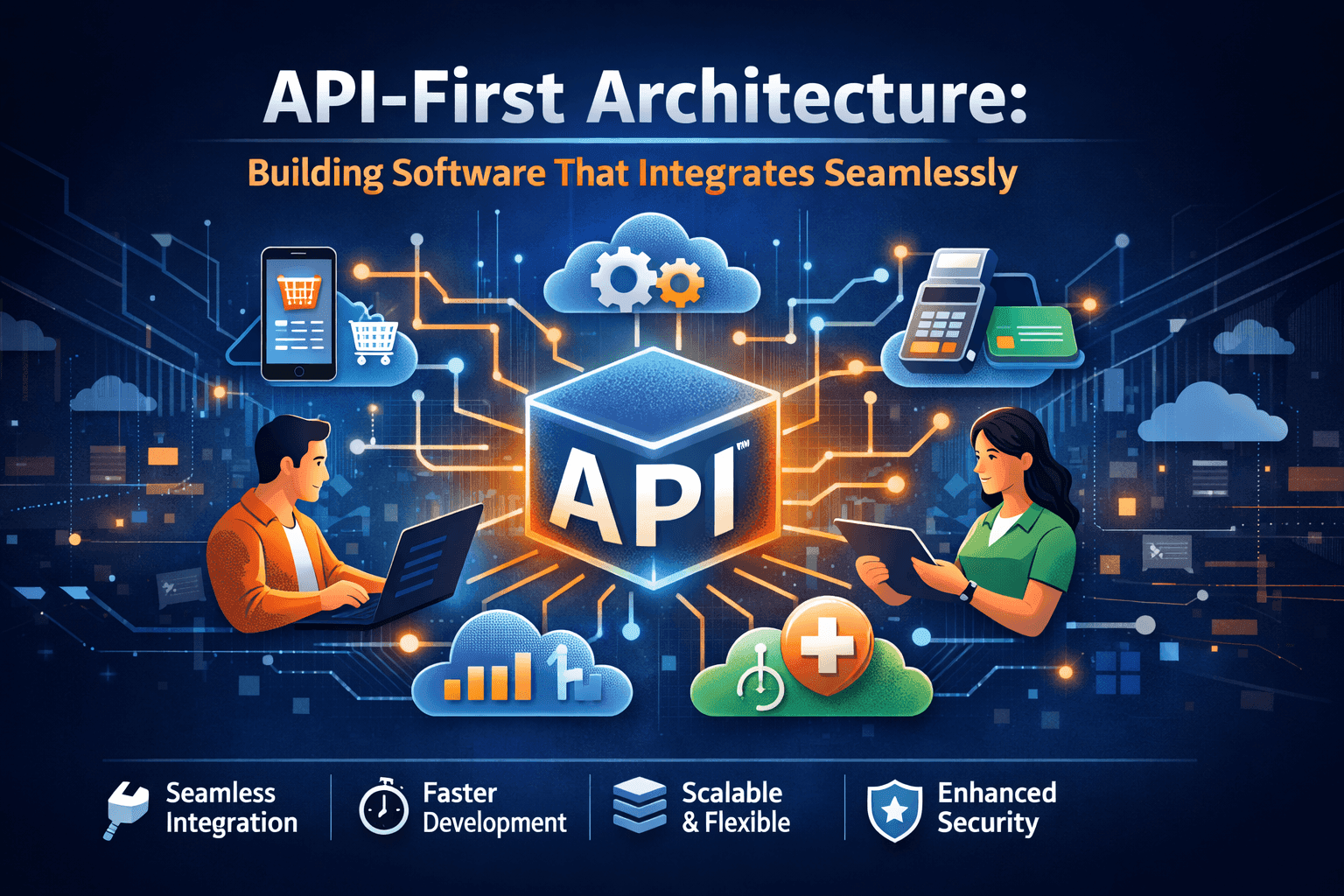
We design microservices with API-first contracts and service mesh observability to avoid fragmentation.
🔸 Serverless Computing: Pay Only for What You Use
Platforms like AWS Lambda, Azure Functions, and Google Cloud Run let you run code without managing servers. Ideal for:
- Event-triggered tasks (e.g., image resizing after upload)
- Scheduled jobs (e.g., nightly reports)
- Burst workloads (e.g., Black Friday traffic spikes)
This model reduces infrastructure costs by 30–50% while improving reliability.
🔸 DevOps & GitOps: Continuous Everything
In 2026, CI/CD pipelines are table stakes. But leading teams go further with GitOps: treating infrastructure and app config as code stored in Git repositories. Every change is version-controlled, peer-reviewed, and automatically deployed—ensuring consistency from dev to production.
Security and Privacy by Design: Non-Negotiable in 2026
Cyber threats are more sophisticated than ever. Regulations like UAE PDPL, GDPR, and ISO 27001 demand proactive protection—not bolt-on fixes.
🔸 DevSecOps: Embedding Security Early
Security is integrated into every phase:
- Static Application Security Testing (SAST) scans code during development
- Dynamic Analysis (DAST) tests running apps for vulnerabilities
- Software Bill of Materials (SBOM) tracks third-party dependencies for known exploits
At Accinge, we automate these checks in pipelines—blocking risky merges before they reach production.
🔸 Zero Trust Architecture
“Trust no one, verify everything.” Modern apps assume breach and enforce:
- Strict identity verification (via OAuth 2.0, MFA)
- Least-privilege access controls
- End-to-end encryption (in transit and at rest)
Even internal microservices authenticate each other before communicating.
🔸 Privacy-First Data Handling
User data is minimized, anonymized, and stored only where legally permitted. Features like data residency controls ensure UAE customer data never leaves regional clouds—critical for compliance and trust.
The Human Factor: Collaboration, Ethics, and Sustainability
Technology alone isn’t enough. The future of software also depends on people, principles, and planetary responsibility.
🔸 Cross-Functional Collaboration
Developers, designers, product owners, and compliance officers now work in integrated squads—using shared tools like Jira, Figma, and Confluence. This breaks down silos and aligns output with business outcomes.
🔸 Ethical AI & Responsible Innovation
As AI makes more decisions, we prioritize:
- Bias detection in training data
- Explainability (so users understand why a loan was denied)
- Human oversight for high-stakes actions
🔸 Green Software Engineering
Efficient code = lower energy use. We optimize algorithms, reduce data transfers, and choose carbon-aware cloud regions to minimize environmental impact—a growing priority for ESG-conscious enterprises.
Conclusion: Future-Ready Software Is a Strategic Imperative
The future of software development in 2026 is defined by intelligence, speed, security, and sustainability. Companies that embrace AI-augmented coding, cloud-native scalability, and embedded security won’t just survive—they’ll lead.
At Accinge Technologies, we help businesses across the UAE and global markets build software that’s not only functional today but architected for tomorrow. Whether you’re modernizing legacy systems, launching a digital product, or automating internal workflows, our team combines technical excellence with deep industry insight.
Ready to future-proof your software strategy?
👉 Contact us for a free architecture review or explore our AI-powered development services.