Predictive Analytics in Inventory Management: Reducing Waste with AI
Predictive Analytics in Inventory Management: Reducing Waste with AI
Inventory management has always been a balancing act. Order too much, and you face waste, storage costs, and dead stock. Order too little, and you risk stockouts, lost sales, and unhappy customers.
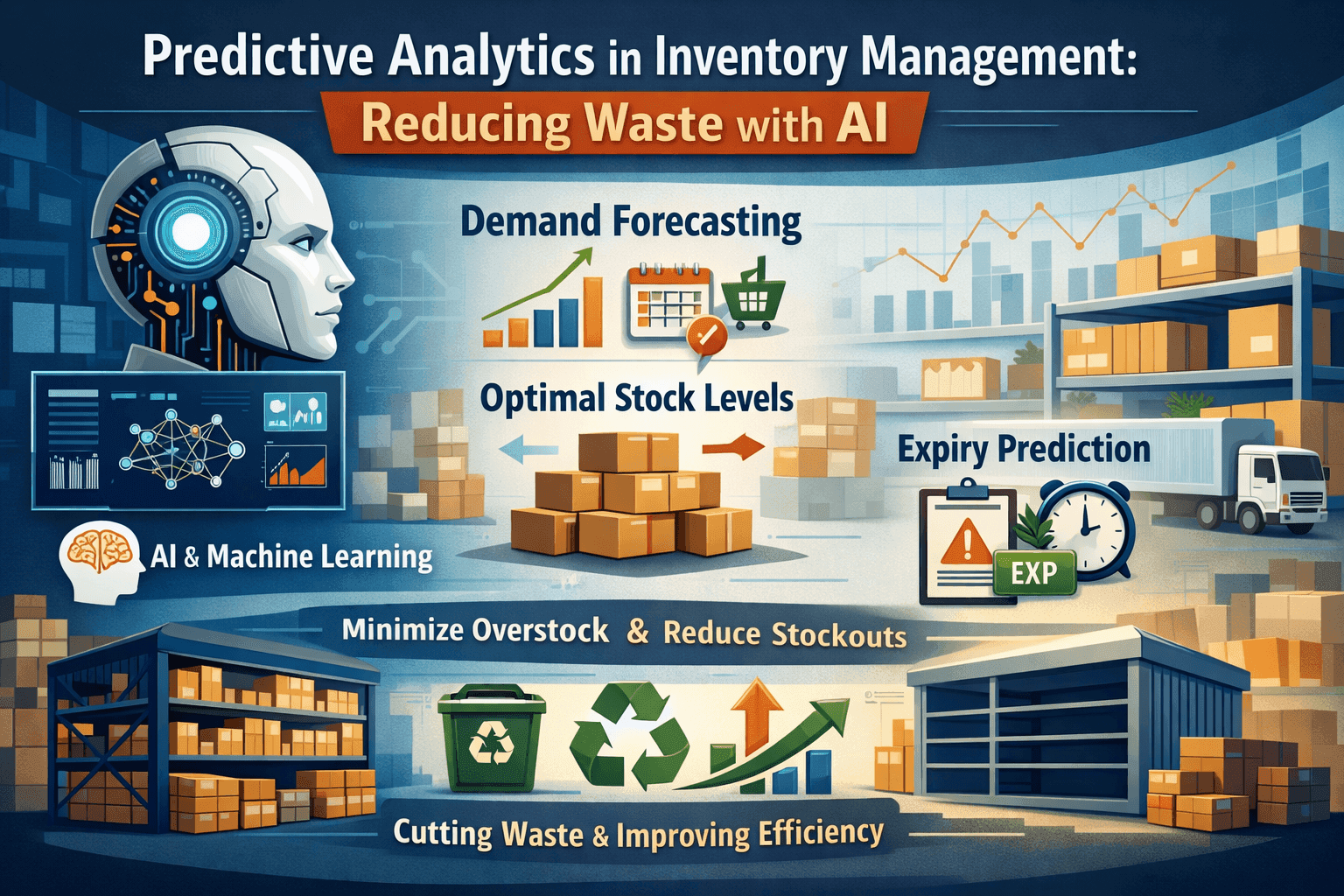
Today, businesses don’t have to rely only on guesswork or historical averages. With predictive analytics powered by AI, companies can forecast demand more accurately, optimize stock levels, and significantly reduce waste.
Let’s explore how this works and why it matters.
What Is Predictive Analytics in Inventory Management?
Predictive analytics uses data, statistical algorithms, and machine learning to forecast future outcomes based on historical patterns.
In inventory management, this means analyzing:
- Past sales data
- Seasonal trends
- Customer buying behavior
- Market demand signals
- Supplier lead times
AI systems process these variables to predict what products will be needed, when, and in what quantity.
Instead of reacting to problems, businesses can proactively plan inventory.
👉 Learn how modern AI solutions improve operations: AI-powered business solutions
Why Traditional Inventory Methods Fall Short
Many businesses still rely on:
- Manual spreadsheets
- Fixed reorder points
- Rough demand estimates
These methods often ignore real-world fluctuations like seasonality, promotions, or sudden demand spikes.
The result?
- Overstocking
- Product expiration
- Storage inefficiencies
- Capital tied up in unused inventory
Predictive analytics helps eliminate these blind spots.
How AI Reduces Inventory Waste
1. Accurate Demand Forecasting
AI models analyze historical and real-time data to predict demand more precisely.
This reduces:
- Excess purchasing
- Expired or obsolete stock
- Emergency restocking costs
2. Smarter Replenishment Planning
Instead of fixed reorder levels, AI suggests dynamic restocking based on demand patterns and supplier timelines.
This ensures:
- Optimal stock levels
- Lower holding costs
- Better cash flow management
3. Identifying Slow-Moving Items
AI quickly detects products that aren’t selling as expected.
Businesses can then:
- Run promotions
- Adjust pricing
- Stop reordering weak performers
4. Minimizing Perishable Goods Waste
For industries like food, pharma, and retail, predictive analytics is a game changer.
AI can forecast:
- Expiry risks
- Consumption patterns
- Seasonal demand
This leads to less spoilage and more sustainable operations.
Real Business Impact
Companies using AI-driven inventory management often see:
✅ Reduced waste and shrinkage ✅ Lower storage costs ✅ Improved customer satisfaction ✅ Better profit margins ✅ More sustainable supply chains
If you’re exploring digital transformation, predictive analytics is a strong starting point.
👉 See how intelligent automation can transform operations: Modern Business
Getting Started with Predictive Inventory Management
You don’t need to overhaul everything at once. Start with:
- Collecting clean historical data
- Digitizing inventory records
- Using AI tools for forecasting
- Partnering with a technology provider
A reliable tech partner can help integrate AI into your existing systems smoothly.
👉 Explore scalable AI and analytics services: https://accinge.com
Final Thoughts
Predictive analytics in inventory management is no longer a luxury—it’s becoming a necessity.
As markets grow more competitive and sustainability becomes a priority, reducing waste while meeting demand is crucial. AI enables businesses to make smarter, data-driven decisions that benefit both profits and the planet.
Companies that adopt predictive analytics today are setting themselves up for more efficient and resilient supply chains tomorrow.