Low-Code vs. Traditional Development: When to Choose What
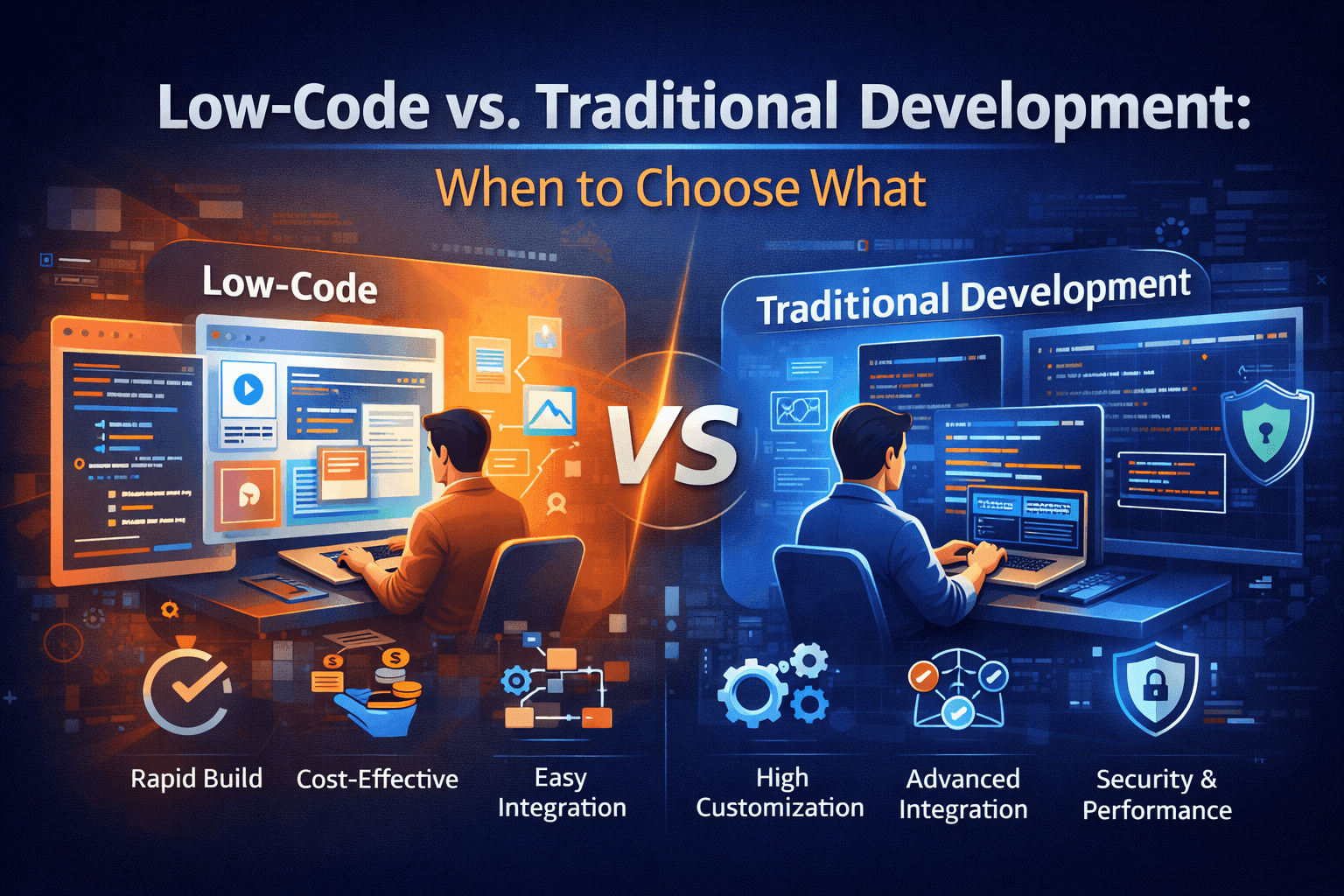
Low-Code vs. Traditional Development: When to Choose What
In today’s fast-paced digital landscape, businesses are under constant pressure to build and deploy applications faster than ever. This has led to the rise of low-code platforms, offering rapid development with minimal coding. At the same time, traditional development continues to be the backbone of complex, scalable systems.
So, which approach is right for your business?
At Accinge Technologies, we help organizations make the right technology choices based on their goals, scalability needs, and long-term vision.
What is Low-Code Development?
Low-code development platforms allow developers (and even non-developers) to build applications using visual interfaces, drag-and-drop components, and pre-built modules.
Key Benefits:
- Faster development cycles
- Reduced need for extensive coding
- Lower initial development costs
- Easy prototyping and MVP creation
What is Traditional Development?
Traditional development involves writing code from scratch using programming languages like JavaScript, Python, Java, or C#. It provides full control over application architecture, performance, and scalability.
Key Benefits:
- High flexibility and customization
- Better performance optimization
- Strong scalability for complex systems
- Full control over security and integrations
When to Choose Low-Code
Low-code is ideal when:
🔹 You Need Rapid Development
If time-to-market is critical, low-code platforms can help you launch applications quickly.
🔹 Building MVPs or Prototypes
Perfect for testing ideas before investing heavily in full-scale development.
🔹 Limited Technical Resources
Businesses with smaller development teams can benefit from low-code efficiency.
🔹 Internal Tools & Simple Applications
Great for dashboards, workflow automation, and internal business tools.
When to Choose Traditional Development
Traditional development is the better choice when:
🔹 You Need High Customization
Complex business logic and unique features require full coding control.
🔹 Scalability is a Priority
Large-scale applications with growing user bases demand robust architecture.
🔹 Advanced Integrations are Required
Custom APIs and third-party integrations are easier to implement.
🔹 Performance & Security Matter
Critical systems (like fintech or healthcare apps) need optimized performance and strict security.
Can You Combine Both?
Absolutely. Many modern businesses adopt a hybrid approach:
- Use low-code for rapid prototyping
- Transition to traditional development for scaling
- Integrate both for maximum efficiency
This approach ensures speed without compromising on quality or scalability.
How Accinge Technologies Can Help
At Accinge Technologies, we guide businesses in choosing the right development approach based on:
- Project complexity
- Budget and timelines
- Long-term scalability goals
- Integration and security requirements
Whether you need a quick MVP or a fully customized enterprise solution, our team ensures you get the best of both worlds.
👉 Explore more insights on our blog:
Accinge Blogs
Final Thoughts
There’s no one-size-fits-all answer when it comes to low-code vs. traditional development. The right choice depends on your business needs, technical requirements, and future growth plans.
By understanding the strengths and limitations of each approach, you can make informed decisions that drive innovation and efficiency.
Looking to build smarter and faster? Partner with Accinge Technologies to choose the right development strategy for your business.